
The Great Race and Navigation through the Labyrinths of AI
In the last 15 days, as in the previous ones, the front of Artificial Intelligence continues to expand — but it seems that this is happening in a pressure cooker. The question is: will humanity be wise enough to cook a good meal, or will the cooker explode without control?
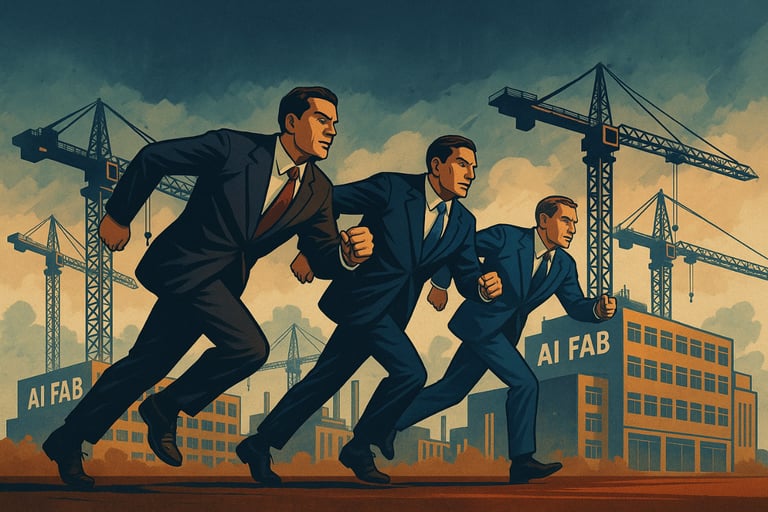
During this period, attention turned to the large technology companies and hyperscalers (hyperscalers — massive computing infrastructures, i.e. data centers and so-called AI fabs — factories for artificial intelligence).
These facilities consist of thousands of servers and hundreds of thousands of GPU chips owned by companies such as NVIDIA, OpenAI, Google, Amazon, and Microsoft, and are used to train models with billions of parameters and to maintain global AI services in real time.
In that “great race,” investments are reaching historical levels and creating a new technological infrastructure — a kind of industrial revolution of the 21st century, but in digital form. Here are the most significant developments of the last 15 days:
What do these numbers mean?
These data illustrate the following situation: infrastructure — physical data centers, chips, energy, and cloud processing — is becoming a limiting factor in the “democratization” or dispersion and development of AI.
That means that those who control the resources (GPU chips, electricity, locations for large centers) will have the advantage.
At the same time, these infrastructure investments (mostly in the U.S.) emphasize the large asymmetry between the U.S. and Europe: while European players emphasize regulation, security, and trustworthiness, the U.S. and some Asian/Gulf centers accelerate the tempo with massive investments.
As already mentioned — the discrepancy between the U.S. and Europe in financing and type of investment could mean: in the short term, the U.S. gains the advantage, but in the medium/long term, Europe (or regions focusing on regulatory safety) may use this cautious approach as prevention of major disruptions, that is, to obtain AI that will be more human-like — that is, careful about value alignment (alignment means the process through which artificial intelligence is programmed and trained so that its goals, decisions, and behavior are in accordance with human needs, intentions, and safety standards*).
In short, this discrepancy between the U.S. and Europe in the speed and scope of infrastructure investments in AI will mean the following — in the short term, the U.S. will have more agile development and an advantage; but in the long term, Europe could use its regulatory and legal framework as a competitive advantage if it positions itself as a “trustworthy and safe” hub for AI.
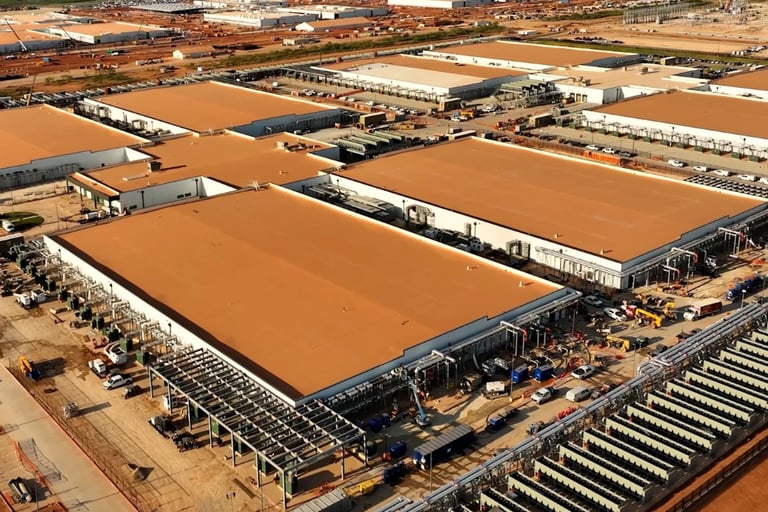
Project: Stargate LLC (collaboration between OpenAI, Oracle Corporation, and SoftBank Group).
Investment: about 1.1 billion USD for the first phase in Abilene, Texas (source: Business Insider).
Characteristics: the campus covers an area of 405 hectares (about 4 square kilometers).
Investments
NVIDIA announced that it will invest up to US$ 100 billion in OpenAI for building data centers and AI infrastructure, with a minimum utilization of 10 gigawatts (GW) of power. findem.ai+3Investopedia+3OpenAI+3
A group of investors led by BlackRock, Microsoft, and NVIDIA is acquiring data-center operator Aligned Data Centers in a deal worth US$ 40 billion. JD Supra+1
In the United States, major tech companies (Microsoft, Alphabet, Meta, Amazon) announced capital expenditures of approximately US$ 370 billion only for the year 2025 in the area of data centers and infrastructure. WIRED
The infrastructure expansion is spreading outside the U.S. as well, as shown by the project “Stargate LLC” (involving OpenAI, SoftBank, Oracle, and others), which plans up to US$ 500 billion in investments in the coming period. Wikipedia+1
Regulation, Ethics, and Global Hubs
1. Regulation
The European Commission (EC), at the end of last year, proposed significant amendments to the framework for protection of personal data, which have direct implications for the use of data when training AI models.
The proposed changes are:Clarification of the definitions for “sensitive data” — that is, to define more precisely what falls into that category and when it may or may not be used for AI training.
A call for greater freedom (“exceptions”) in the use of data for AI models, but under clearer conditions and controls.
Increased transparency and rights for the persons whose data are used — i.e. control is not being removed, but tightened in the sense of greater accountability.
In other words: the rules are not being “significantly loosened,” but are becoming stricter and more precise.
This means that anyone dealing with AI-model projects should think in time about data classification, protection of individual rights, and documentation of data usage.
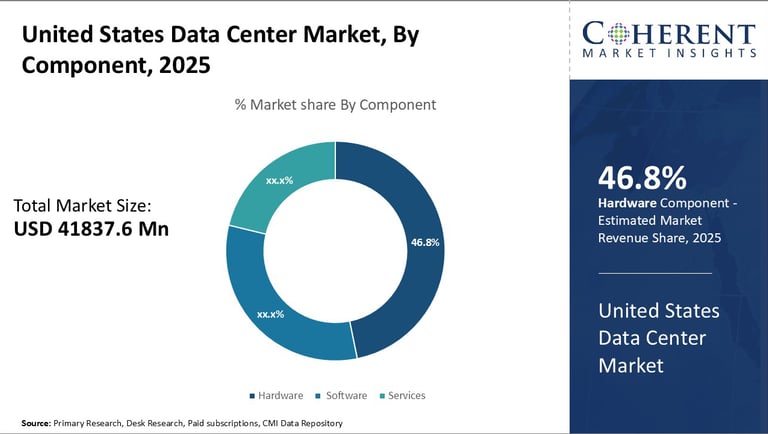
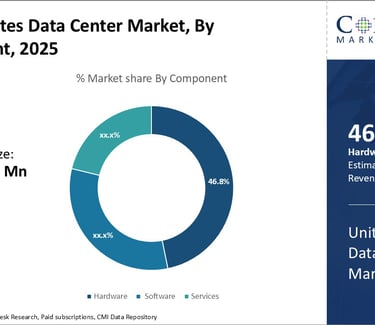
Инвестиција/пазар: Според анализа, до 2030 година глобално ќе се инвестираат приближно US$ 7 трилиони во дата-центри, при што повеќе од 40 % од таа сума ќе отиде во САД. McKinsey & Company. Карактеристики: САД доминираат во хиперскалирани капацитети – пример: Северна Вирџинија има инсталирана капацитет приближно 4.000 MW.
2. Ethics and Corporate Responsibility
In the international context, UNESCO, together with the Mexican CANIETI and support from Microsoft, launched a model for ethical and responsible use of AI.
The model is intended for companies in Mexico, but it marks the growing priority of corporate and global responsibility in AI development.
In essence: not only “what we can do” with AI, but “how we will do it.”
Global Hubs
The Gulf region and the Middle East (for example, Saudi Arabia) are emerging as new hubs for AI investments — striving to attract giga-centers, private and public capital, and global companies.
This means that the global distribution of infrastructure is expanding: not only the U.S. and Europe, but also new regions will have a role.
This brings a new challenge: the geopolitical implications of AI infrastructure (where centers are located, who controls server capacity, energy, and supply chains) are becoming an important part of strategic considerations.
Jobs and Social Implications
A frequently overlooked aspect is the impact of AI infrastructure and automation on employment.
Although large data centers and AI infrastructure investments are presented as job creators, a study shows that, for example, the data center in Abilene, Texas, employed about 1,500 construction workers during building, but once finished, it will have only about 100 permanent employees. The Wall Street Journal
On the other hand, research from Cornell University shows that approximately one-third of U.S. employees are “highly exposed” to automation through AI technologies arXiv
This means — infrastructure investments do not guarantee a proportional number of jobs, and automation may affect traditional work activities.
3. Application in Industry and Process Transformation
One of the interesting trends is how AI agents are already changing the way traditional teams and processes function.
For example, writing code, working within agile methodologies, and even role distribution — all are being reformatted under the influence of AI agents.
This has practical implications: for companies, it means that AI is not an additional tool, but will become an integrated part of the process — bringing challenges in management, control, and organizational adaptation.
4. Resistance: AI as “Support” of Opposition
In the United Kingdom, a warning appeared that AI tools could slow down the process of urban planning.
Platforms that automatically scan projects, analyze public opinion, and generate objections make the process slower and potentially block it The Guardian
5. Major Industry Gathering and International Implications
In Hong Kong, the GBA International Artificial Intelligence and Robotics Summit 2025 was opened under the motto “Empowering Resilient Industries through Embodied AI.”
Experts from southern China, Switzerland, Germany, Italy, Japan, Korea, and others participated.
The very slogan and composition of participants show that AI + robotics are becoming a clear part of industrial strategy — encompassing production, automation, the supply chain, and global competitiveness.
6. New Jargon, New Reality
In relation to how deeply AI penetrates everyday technological work, the term “vibe coding” appeared — describing the transition from manual coding to a paradigm where programmers use natural language and agent systems to generate code WebProNews
It signals that the future of development will be dictated not only by machines, but also by the way we communicate with them — more conversation, less coding.
What Does This Mean for Us?
End of “loose” regulation — While AI innovations used to happen rapidly and with little control, regulators are now acting aggressively.
Anyone working with AI should keep in mind that data, transparency, and ethical design will become part of the “infrastructure” of projects.Application and concept — From the research phase, AI now enters operations: industry, industrial robotics, agent systems, and process software.
This means that companies adopting early will have an advantage — but will also face organizational challenges.New types of risks — Not only hypothetical ones (like “super-agents”), but concrete: process delays (as with planning approvals in the U.K.), regulatory implications, ethical issues, and even media and legal consequences.
The time to “mass AI” is shortening — and not only technically: terms, tools, and expectations are changing quickly.
If the daily work of programmers, engineers, and even managers will include communication with AI agents and “vibe coding,” then adaptability will be key.Local impact — Although these news items come mainly from global centers, the effects reach the region too (the Western Balkans).
Anyone planning a business model (for example, design, training, or emission certification) should think deeply about how AI will affect industry, regulation, and digital infrastructure in the region.
AI Agents: the New Framework of Application
One of the most dynamic segments is the development of “agentic” systems — where AI not only responds, but plans, decides, and acts.
Here are five current updates:
Google Cloud – launched six new agents for data, engineering, and data migration.
Amazon Web Services (AWS) – presented the platform “AgentCore” for development and management of agents at hyperscale.
Ericsson – developing “Telco Agentic AI Studio”: agents for telecommunication applications (OSS/BSS).
Industry analyses confirm that 2025 will be the “year of the agents,” and realization will depend on how well organizations manage the risks (hype vs reality).
Corporate cases show that agents are already being implemented, but with significant challenges: hallucinations (unreliable responses), high costs, and security issues.
Conclusion
In a context where technologies advance faster than legislation, infrastructure investments explode, and automation spreads across different sectors — the rise of AI represents a major transformation: it is not only a new tool, but a new way of working, organizing, and structuring globally.
In other words:
Infrastructure (chips, data centers, energy) becomes an integral part of the AI ecosystem — not just the models.
The regulatory framework is tightening — not as a barrier, but as an inevitable part of strategy.
Jobs will be reformatted and transitioned — not only in number, but in type, role, and organization.
AI agents are already a reality — and those who ignore them will lag behind.
The global geography of AI infrastructure is expanding — new regions and geopolitical players are becoming relevant.
It is clear that we are in the early phase of a massive transformation, and it is not just a new model, but a new way of developing and using AI systems.